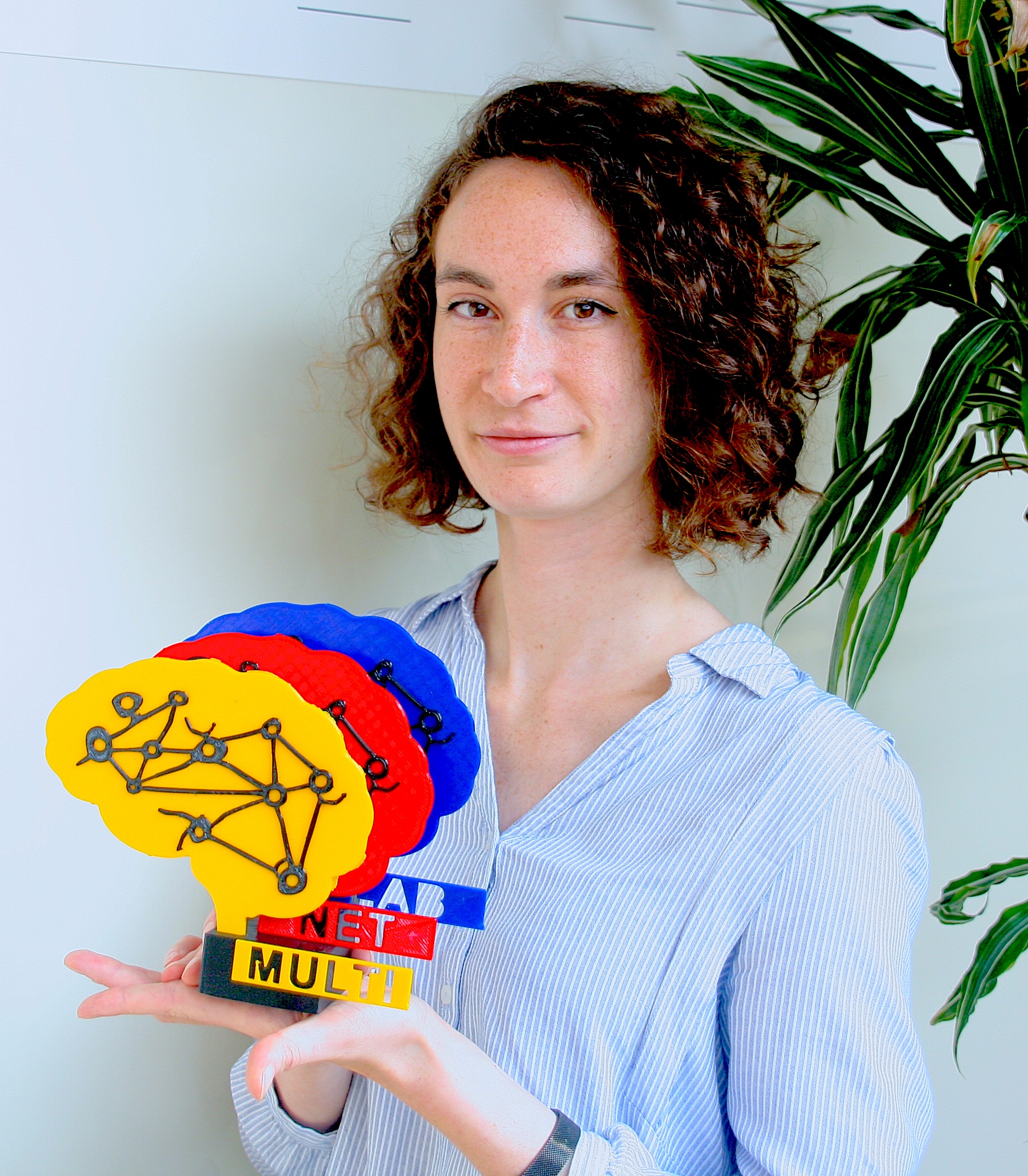
As a PhD student with a deep fascination for neuroscience, I am dedicated to exploring the complexities of the human brain, especially when that research is applied to the clinical population. I got my Bachelor’s degree in Biopsychology from the University of Primorska in Slovenia, my home country. During my final year, I participated in a student exchange program at Erasmus University in Rotterdam, where I conducted EEG based research on the mechanisms of anxiety. I enjoyed my time in the Netherlands so much that I decided to stay for my Master’s degree. I completed my Master’s in Neuroscience at the Erasmus Medical Center in Rotterdam. For my Master’s internship, I focused on testing the reliability of a newly developed TMS protocol for obtaining upper-limb motor maps, a protocol that can be used to measure neuroplasticity of stroke patients. After completing my Master’s program, I joined MindAffect, a health technology start-up spun out of the Donders Institute. At MindAffect, we adapted a patented machine learning algorithm, originally designed for brain-computer interfaces, to enable rapid and objective testing of hearing abilities through EEG/ERP analysis, making a hearing test inclusive for all types of clinical populations.
At the MULTINET Lab, I will be working on the PREDICT project, which aims to predict postoperative cognitive decline in brain tumor patients. We will use computational modeling on data collected with diffusion MRI and MEG, which, along with tumor characteristics and patient demographics, will provide input to a machine learning classifier. Our ultimate goal is to evaluate whether a personalized, individual-based approach provides more accurate predictions than a generic, group-averaged approach. It’s a very exciting project that addresses the current hot topics in personalized medicine and digital twins, and I’m eager to contribute to this important research.
If you’re interested in my project or have thoughts to share, contact me at e.koderman @ amsterdamumc.nl; I look forward to connecting.
 Multiscale Network Neuroscience
Leave a comment